Keep your books so plain that a stranger could read them.
Most small business money trouble begins as a small habit: a card used for the wrong thing, a receipt left in a coat pocket, a tax bill nobody saw coming. This guide walks through the dull, reliable routines that prevent it, in the order you are likely to need them.

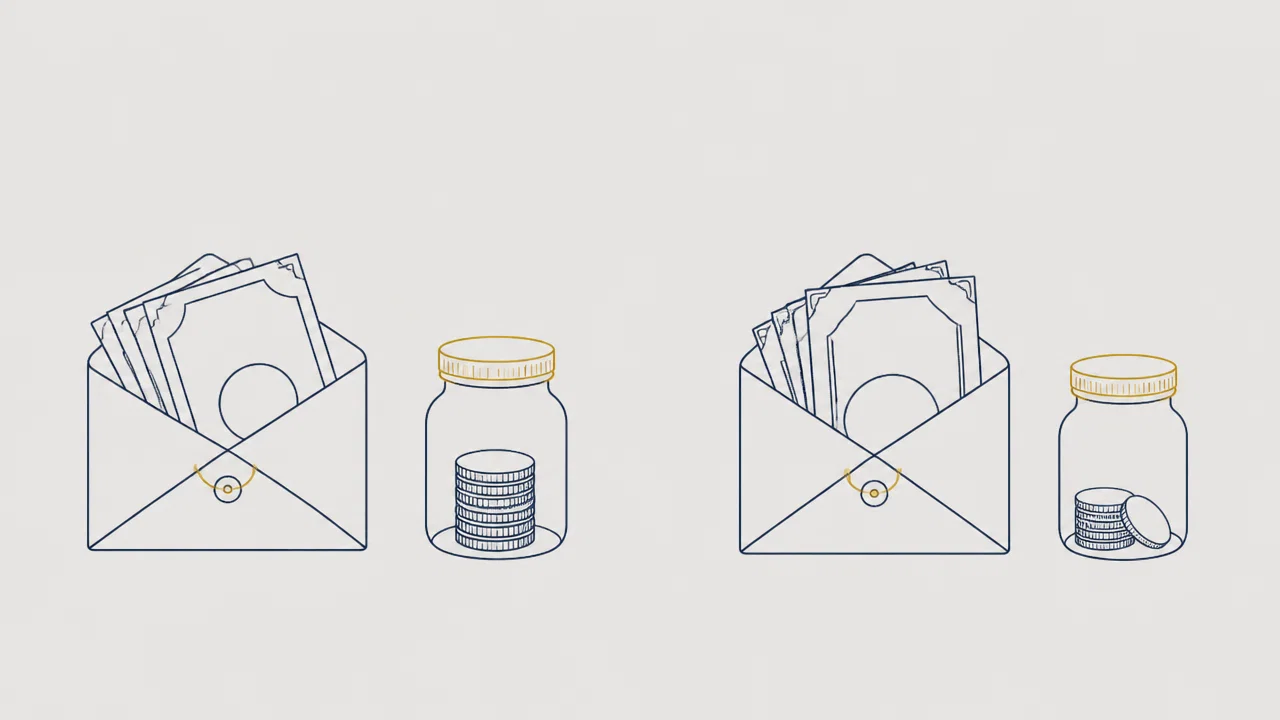
Separate the accounts first
If you take only one thing from this page, take this one: open a bank account that is used for the business and nothing else. Every payment in and out then belongs to the business by definition. You stop asking yourself whether a coffee, a train ticket or a software subscription was personal, because the account answers for you.
The benefit shows up months later. When you sit down to prepare a tax return or answer a question from a lender, one statement tells the whole story. Mixed accounts force you to rebuild the story line by line, and the rebuilt version is usually wrong in small ways that cost time to explain.
A simple way to run two streams
- All client payments land in the business account, never in a personal one.
- All business costs are paid from the business account or a card tied to it.
- You pay yourself on a schedule, a fixed amount on a fixed day, and the transfer is recorded as a draw rather than an expense.
- If you slip and pay a business cost personally, note it the same day so it can be reimbursed to you from the business account.
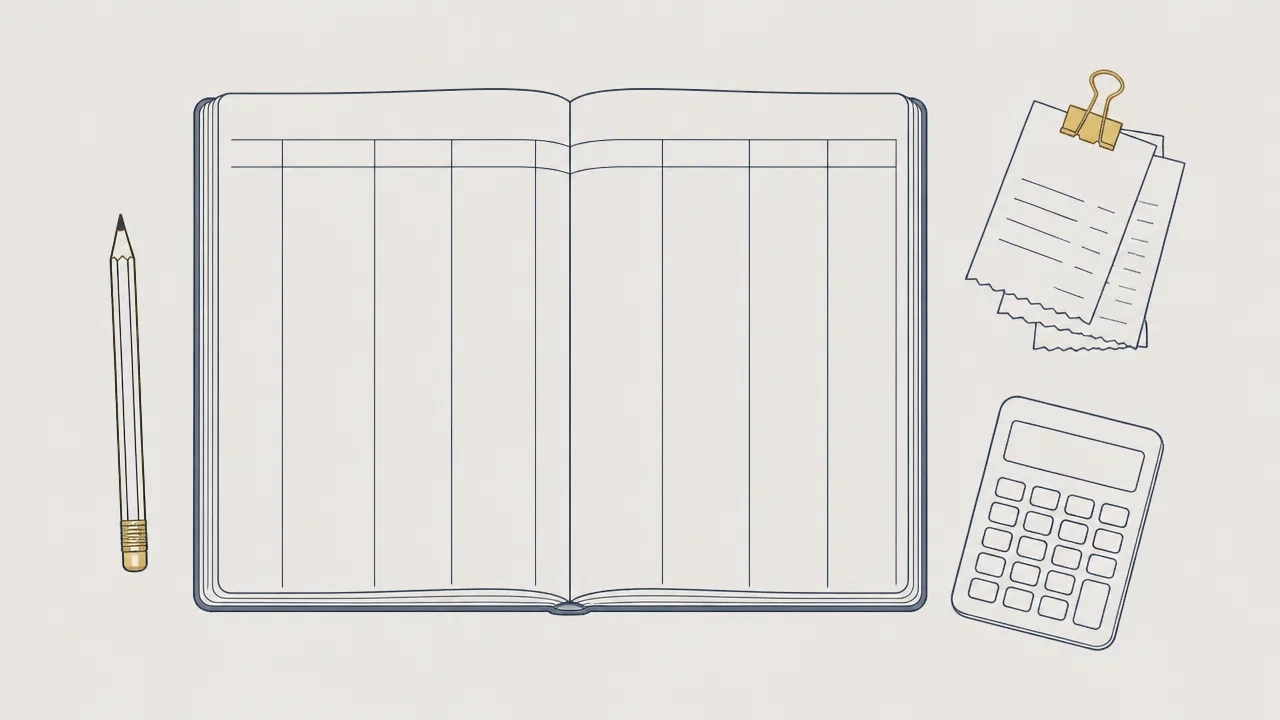
A journal of money in and money out
Bookkeeping at this scale is a list. Each line records a date, who paid or was paid, a short description, the amount, and a category. That is it. The category column is where the usefulness lives, because it lets you add up what you spent on software, travel or supplies without rereading every line.
Keep the categories few and stable. Eight to twelve is plenty for most one-person businesses. Changing them mid-year makes comparisons meaningless, so decide at the start and add a new one only when a real gap appears.
| Date | Counterparty | Description | In | Out | Category |
|---|---|---|---|---|---|
| 03 Mar | Client A | Invoice 014, design work | 900.00 | Sales | |
| 05 Mar | Software vendor | Monthly subscription | 24.00 | Software | |
| 09 Mar | Rail operator | Travel to client meeting | 38.50 | Travel | |
| 14 Mar | Owner | Monthly draw | 1,200.00 | Owner draw |
Reconcile the journal against your bank statement once a month. Reconciling simply means checking that the closing balance in your list matches the closing balance at the bank. When it does not, the difference is almost always a missed line or a typo, and it is far easier to find after thirty days than after twelve months.
Receipts and supporting records
A line in your journal says something happened. A receipt or invoice proves it. If a tax authority, a bank or a client ever asks, the supporting document carries the weight, so the habit worth building is to capture it at the moment of purchase.
Photograph paper receipts before they fade, since thermal paper often turns blank within a year. Save emailed invoices into a folder named by year and month. Give each file a name that starts with the date, so the folder sorts itself.
What a useful record shows
- The date and the name of the supplier or customer.
- What was bought or sold, in a few plain words.
- The amount, and any tax shown as a separate figure.
- How it was paid, so you can match it to a bank line.
For anything unusual, such as a large equipment purchase or a payment to a relative, add a short note on why it was a business matter. Future you will not remember.
Sales tax and VAT in general terms
Many places charge a tax on sales, called sales tax, VAT or GST depending on the country. Whether you must register, at what turnover, and which of your sales are covered all vary, and the rules for online sales across borders have been changing for years. This is a topic where guessing is expensive.
What you can do in general terms is keep your records ready for whichever rules apply. Record the tax on each sale as its own figure, separate from the price. Record the tax you paid on purchases the same way. Never treat collected tax as income, because it is money you are holding for someone else until it is paid over.
If you are close to a registration threshold, or you sell to customers in several regions, speak to a professional before the threshold arrives rather than after.
Setting money aside for tax
Self-employed income usually arrives with no tax taken off. The bill comes later, in one lump or in installments, and it lands hardest on people who spent the whole of every payment as it came in. The remedy is mechanical. Each time you are paid, move a fixed share into a separate savings account that you do not touch for anything else.
The right share depends on your profit, your location and your circumstances, so it is not something a general page can set for you. A common approach is to start with a cautious percentage, then adjust it after a professional has looked at a real year of your figures. Over-saving feels dull; under-saving feels like panic.
A calendar for the year
Bookkeeping goes smoothly when it is scheduled in small pieces rather than left for a rescue weekend. A rhythm like the one below keeps each task short. Your own deadlines will differ, so treat it as a template and fill in the real dates for your country.
Every week
File new receipts, record the week's transactions, and check that no client payment is overdue.
Every month
Reconcile the journal to the bank statement, send invoices, and move your tax share to savings.
Every quarter
Review totals by category, check any estimated tax or sales tax deadlines, and note what changed.
Every year
Close the books, gather records for your return, review equipment and subscriptions, and plan the next year.

What to ask a professional
An accountant is most useful when you arrive with tidy records and specific questions. Two hours spent on a clear list beats ten spent on a shoebox of paper. The following are good places to start.
- Which legal form suits my situation, and what does each change about tax and liability?
- Should I register for sales tax or VAT now, and how do I show it in my records?
- Which costs can I treat as business expenses, and what proof do I need to keep?
- How much should I set aside, and when are the payments due?
- What is the best way to record equipment, a home office or mileage?
- Which deadlines apply to me this year, and what happens if I miss one?
Ask about fees up front, and ask what you are expected to bring. A good professional will tell you plainly what they need from you.
Common mistakes and how to avoid them
Mixing accounts
One card for everything makes every line a debate. Separate early and the debate disappears.
Losing receipts
Capture them the day you get them. Photos taken in the moment beat a memory six months later.
Spending the tax share
Money collected for tax is not income. Park it in its own account the same day you are paid.
Skipping reconciliation
A monthly check turns a small slip into a five minute fix instead of an evening of detective work.
Waiting for year end
A big annual catch-up is where errors breed. Short, regular sessions keep the load light.
Guessing on rules
Tax rules vary by place and change over time. When unsure, ask before acting.
Short answers to common questions
Do I need accounting software to keep decent books?
No. A spreadsheet with one row per transaction and a folder of receipts is enough for many sole traders and freelancers. Software mainly saves time once the number of transactions grows, and it can match your bank feed for you.
How long should I keep receipts and records?
Rules differ by country and by type of record, and they change. Many tax authorities ask for several years at minimum. Check the guidance from your own tax authority, or ask a professional, rather than relying on a general rule.
Is a business account really necessary?
Often it is not legally required for a sole trader, but it makes your books far easier and gives you a clean trail if anyone ever asks questions. Most people who try it do not go back.
What is the difference between cash basis and accrual?
Cash basis records income when money arrives and expenses when money leaves. Accrual records them when the invoice is issued or the bill is received. Which one you may or must use depends on where you live and the size of your business.
Can this site tell me how much tax I owe?
No. It explains concepts in general terms. Your figure depends on your location, your situation and the current rules, so it needs a qualified professional or your tax authority.
Plain Ledger is independent. It sells nothing and offers no services. Legal information